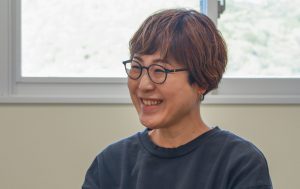
Professor Kimiko Osawa is a political scientist who teaches “Governance” module.
What is this module about?
In this module, we explore a wide range of political phenomena, including regimes, institutions, policymaking, political participation, nationalism, gender and politics, conflict, and international politics. While the foundation is in political science, we also draw insights from other social science disciplines to broaden our perspective.
A central focus is building a strong and interconnected base of concepts, facts, and scholarly arguments. In today’s world, where information is easy to access, the importance of internalized knowledge can be underestimated. However, without it, we lack the tools to search effectively or critically assess what we encounter. Through close reading, group work, and analytical exercises, students develop the ability to construct arguments, evaluate political claims, and analyze real-world cases using key political science approaches. These are essential skills for engaging meaningfully with political questions and information.
What do you want students to get out of this module through taking your courses?
Through the activities, readings, and discussions in my courses, I want students to develop genuine curiosity about politics, both near and far, and become more engaged, thoughtful observers of political life.
I aim for students to develop the ability to craft clear, evidence-based arguments grounded in logic and supported by established research and academic discourse, rather than relying on personal speculation or overconfident, self-invented “strongest theories.” The goal is to cultivate critical engagement and the capacity to build arguments that draw on, but also critically reflect on, the accumulated human knowledge and wisdom found in scholarly work.
In the end, I want students to leave the course as informed and empowered members of their political communities, ready to engage thoughtfully, critically, and responsibly with the world around them.
What is the most important thing about university education for you?
For me, university education is not just about preparing for a career. It is about learning how to engage deeply with ideas, people, and the world. Even if students do not pursue academic paths, I believe that doing serious academic work teaches valuable habits: discipline, reflection, and the ability to grapple with complexity.
I want students to practice taking different perspectives, balancing grounded, lived experiences with broader, structural or “eagle-eye” views. This includes developing both objective and subjective understandings, as well as intersubjective awareness, or the ability to create shared meaning with others across differences.
Ultimately, I hope students will grow into respectful, ethical, and thoughtful individuals. I want them to be humble, yet bold enough to take action, ready to engage generously with others, and able to make a positive impact on society.
What kind of topics can students in your research seminar do for Senior Project?
Students in my research seminar pursue a wide range of topics. Some focus on more conventional political science questions, such as why certain policies are adopted, how international disputes escalate, why similar social movements produce different political outcomes, the reasons behind low political engagement, or how foreign powers influence nation-building processes. Other students take on more interdisciplinary topics, such as the political uses of art, political satire, or how climate change debates in the Anthropocene are shaped by capitalism and colonialism.
I welcome both conventional and interdisciplinary projects, but I expect students to choose topics that are closely connected to politics, broadly defined, and to engage meaningfully with political science literature wherever possible.
Course List
Introduction to Political Science, Introduction to Japanese Politics, Comparative Politics, International Politics, Japanese Politics, Topics in Political Science 1, 2, 3, 4