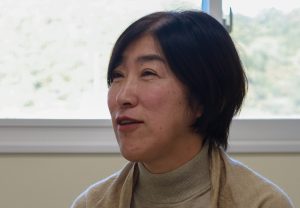
 Professor Yumiko Yamamoto is an economist who teaches “Economics” module.
What is this module about?
Economics is not a single, unified discipline; it encompasses a range of schools of thought. I teach both orthodox (mainstream) economics and heterodox economics. Mainstream economics, grounded in neoclassical models, emphasizes market-based analysis and efficiency. Heterodox economics includes diverse perspectives—Marxist, institutional, feminist, and others—that challenge core assumptions and bring history, power relations, and social structures into the conversation. I believe that exposing students to multiple schools of thought deepens their understanding and nurtures critical thinking. The study of economics can improve our lives, but how do we define improvement? Improvement of what, and from whose perspective? These questions lie at the heart of how we understand economic theories and policies. By learning to question models, assess assumptions, and consider diverse worldviews, students become better equipped to engage with real-world complexities—and to envision how economies and societies might be transformed.
What do you want students to get out of this module through taking your courses?
Economic issues are all around us, yet few students have deeply considered how the economy runs. How is the wage rate for your part-time job determined? Why are your clothes made in another Asian country? Is a tax cut always beneficial? Studying economics can help you live better, but it should not be about memorizing facts or uncritically accepting established ideas. After learning how to interpret statistical indicators such as income per capita, unemployment rates, and poverty rates, students will critically assess what these numbers mean and how (un)useful they are in evaluating quality of life. Through questioning, expressing their views, and discussing policies from diverse perspectives, students will understand that there are no one-size-fits-all answers and feel the need to study other disciplines such as political sciences, history, environmental studies, and others, to recognize injustice, imagine alternatives, and work toward meaningful change.
What is the most important thing about university education for you?
For me, it is the opportunity for intellectual exploration and personal growth. At the Discovery Program, students are required to take introductory courses across various disciplines during their first and second years. This broad-based approach encourages students to explore their intellectual curiosity and often leads them to discover fields they had not encountered before. Many later pursue these newfound interests through their senior projects or further graduate studies.
In Japan, it is common for students to enter the workforce immediately after graduation. While acquiring career-relevant knowledge and skills is important, university education offers much more. In times of unprecedented challenges, it becomes crucial for individuals to think and act calmly and thoughtfully in response to change. The ability to gather and analyze information, engage in dialogue with people from diverse backgrounds, seek possible solutions, and turn ideas into action are all essential skills that can be cultivated through university experiences.
What kind of topics can students in your research seminar do for Senior Project?
Students can explore a wide range of topics in economics, from microeconomic to macroeconomic issues.
Some focus on specific commodity markets or industries, while others conduct country-level or cross-country analyses. Past themes include international trade and development, regional revitalization, socio-economic factors determining access to safe drinking water, and the impact of inflation on household food security and nutrition. Depending on their chosen topic and background knowledge, students can apply quantitative or qualitative analysis or other methods.
Because students’ interests in economics are so diverse, my research seminar encourages intellectual curiosity and independent exploration. Students select book chapters or journal articles aligned with their interests, give brief presentations summarizing key findings, and highlight research questions that emerge after reading them. Through peer discussions and ongoing reflection, each student gradually refines their research focus and ultimately selects a topic and methodology for their senior project.
Course list:
Introduction to Microeconomics, Introduction to Macroeconomics, Microeconomics, Macroeconomics, International Economics, Trade Policy and Development, Development Economics, Poverty, Inequality, Introduction to Feminist Economics.